
(01)—200HR Facilitators

Meet the facilitators

Most 200-hour trainings stretch a small in-house team across the whole syllabus. Ours brings in specialists module by module — a Sanskrit scholar for Sanskrit, a philosophy professor for philosophy. Each facilitator teaches their own subject, and the order they arrive in is the curriculum.

(02)—Program integration

Program integration

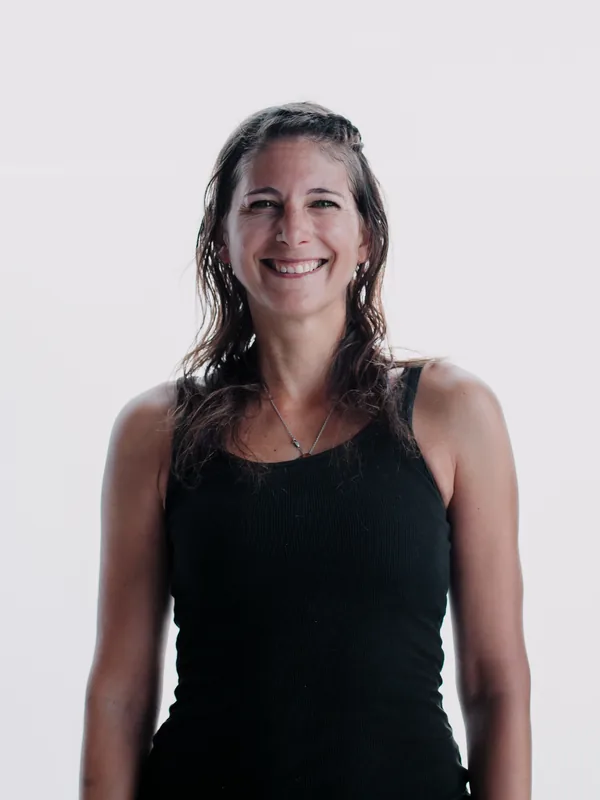
Theresa Batbold, Yogalife studio manager and 200-hour teacher training facilitator.

Theresa Batbold

Program Integration

Studio Manager, Yogalife Studios

Theresa holds program integration for the 200-hour training. Where each facilitator is responsible for their own module, she is responsible for how those modules hold together — that the cohort meets the material as one training rather than a run of separate weekends.

As Yogalife’s studio manager she also carries the logistics: rooms, scheduling, the practicum bookings, and the day-to-day of running a four-month program across two studios. It is the work that makes the rest of the training possible without ever appearing on the syllabus.

Also teaches on the public schedule →

(03)—Stage 1 · Mind

Foundations

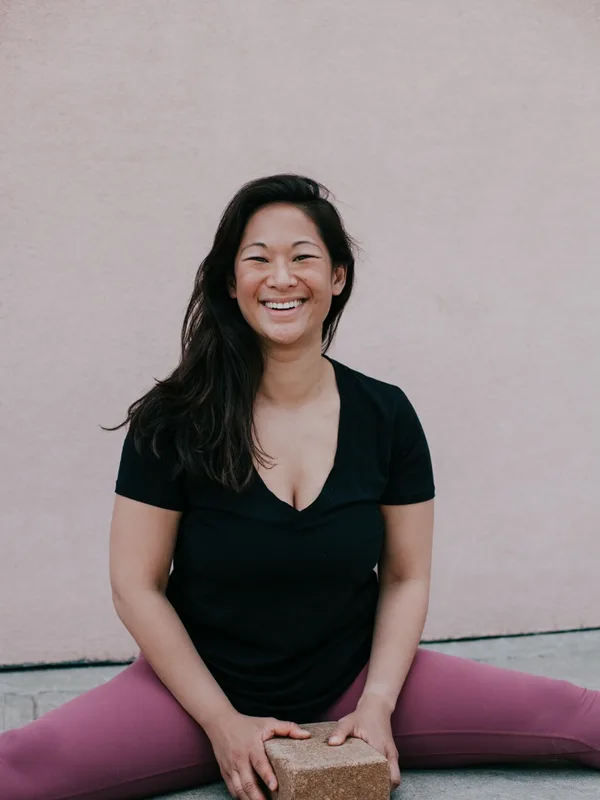
Caren Hui, owner of Yogalife Studios, seated in a studio room.

Caren Hui

Ethics & Guiding Principles · Stage 1 · Mind

Also teaches Business of Yoga · Stage 4 · Heart

Owner, Yogalife Studios

Caren owns Yogalife and runs both Edmonton studios. She opens the program with Ethics & Guiding Principles on day one — the container and the principles the cohort practices by — and closes it on the last afternoon with Business of Yoga.

Bookending the training is deliberate. The person who sets the terms on the first morning is the person who talks candidly about rates, insurance, finding classes, and what studio owners actually look for on the final afternoon.

Kelsey Lummer, 200-hour teacher training facilitator.

Kelsey Lummer

Yamas & Niyamas · Stage 1 · Mind

Also teaches Chakras & Pranayama, 5-Day Intensive · Stage 3 · Spirit

Kelsey teaches Yamas & Niyamas early in Stage 1, moving the cohort from rule-following toward authentic knowing, with The Untethered Soul as the key text.

She then returns in Stage 3 to lead the five-day intensive over the Victoria Day long weekend — breath, subtle body, energy centres, and self-inquiry. Opening the ethical foundation and later leading the deepest inward stretch of the program is the same throughline taught twice, once as groundwork and once as practice.

Also teaches on the public schedule →

Neil Dalal, who teaches History & Philosophy on the 200-hour teacher training.

Neil Dalal, PhD

History & Philosophy · Stage 1 · Mind

Associate Professor of South Asian Philosophy and Religious Thought, University of Alberta

  • PhD in Asian Cultures and Languages (Indian Philosophy and Sanskrit textual studies), University of Texas at Austin
  • Approximately four years studying with monastic renouncers (saṃnyāsins) and traditional scholars (paṇḍits) in India

Neil teaches History & Philosophy — the Bhagavad Gita and the Sutras of Patanjali — in Stage 1, where the cohort learns where the practice comes from before they learn to teach any of it. He teaches the same texts at university level.

Most 200-hour trainings teach philosophy from a translation and a summary. This module is taught by someone who reads the originals.

Deepro Chakraborty, who teaches Sanskrit on the 200-hour teacher training.

Deepro Chakraborty

Sanskrit · Stage 1 · Mind

Graduate researcher, Faculty of Arts — History, Classics and Religion, University of Alberta

Deepro teaches Sanskrit — the language of the practice, made approachable — sitting directly alongside Neil’s philosophy module in Stage 1.

The pairing is the point. Neil gives the philosophical arc; Deepro gives the vocabulary underneath it, so the terms the cohort will use for the next four months are understood rather than repeated.

(04)—Stage 2 · Body

Asana

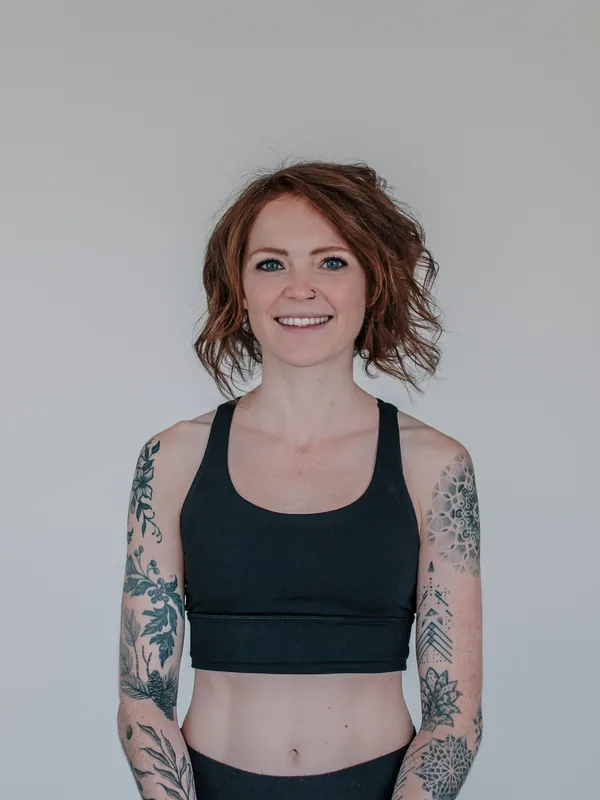
Melissa Perret-Boyko, 200-hour teacher training facilitator.

Melissa Perret-Boyko

Postures & Asana Labs · Stage 2 · Body

Melissa teaches asana structured by function rather than by shape, which is what makes it teachable rather than only performable.

Her Asana Labs are where the cohort starts teaching: a single pose, with feedback, in week one. Everything in the teaching thread builds from that first pose.

Also teaches on the public schedule →

Jenn Poholka-Myatt, 200-hour teacher training facilitator.

Jenn Poholka-Myatt

Sequencing · Stage 2 · Body

Jenn teaches sequencing as decision-making — making sound practical choices rather than following instructions.

Her module is where the cohort moves from teaching a pose to teaching a sequence, and they teach those sequences rather than only writing them. It sits after Melissa’s work for that reason.

Also teaches on the public schedule →

Michelle Chung, 200-hour teacher training facilitator.

Michelle Chung

Sequencing · Stage 2 · Body

  • Master of Occupational Therapy (M.OT)
  • 800+ hours of yoga teacher training; teaching since 2008

Michelle joins Jenn on Sequencing, supporting the cohort as they move from writing sequences to teaching them.

Her background in Occupational Therapy shapes how she teaches: classes that are safe and accessible whatever a student is working with. In a module about making sound practical decisions, that lens is a useful one to learn from.

Also teaches on the public schedule →

Taylor Quast

Functional Anatomy & Movement · Stage 2 · Body

Taylor teaches functional anatomy and movement, blending modern movement science with the Ashtanga lineage. The program manual is included with the module.

It lands in Stage 2 alongside the asana work so anatomy arrives as something the cohort can immediately apply to the poses they are learning to teach, rather than as theory held separately.

(05)—Stage 3 · Spirit

The Subtle Practices

April Cantafio

Mantras · Stage 3 · Spirit

April teaches mantra — sound as practice rather than sound as decoration.

It opens Stage 3, the turn inward, once the cohort has enough physical and philosophical grounding for subtle work to land rather than float.

Kat Boehm

Mindfulness & Meditation · Stage 3 · Spirit

Kat bridges Western mindfulness and classical philosophy, connecting the vocabulary most students arrive with to the tradition the training is built on.

Her module is the gateway to the subtle work in Stage 3 — the point where the practice stops being primarily physical.

Sarah Farrell

Fascia & the Subtle Body · Stage 3 · Spirit

Sarah moves the cohort from the functional to the somatic, carrying the anatomy of Stage 2 into the subtle body. Mini-manuals are included with the module.

Placing it in Stage 3 rather than beside the anatomy work is intentional: it needs students who already have a working physical vocabulary to push against.

Kelsey Lummer, 200-hour teacher training facilitator.

Kelsey Lummer

Chakras & Pranayama, 5-Day Intensive · Stage 3 · Spirit

Also teaches Yamas & Niyamas · Stage 1 · Mind

Kelsey returns to lead the five-day intensive over the Victoria Day long weekend: breath, subtle body, energy centres, and self-inquiry, across five consecutive days rather than a weekend.

She opened the ethical foundation in Stage 1. The training brings her back for its deepest stretch because the intensive asks the cohort to sit with the same questions she introduced at the start, with four months of practice behind them.

Also teaches on the public schedule →

(06)—Stage 4 · Heart

Integration

Sonia Dhillon

Ayurveda · Stage 4 · Heart

Sonia teaches Ayurveda as the science of yoga made into a practical way of life — how the practice extends past the mat into sleep, food, season, and routine.

It sits in Stage 4 because integration is the stage’s job: taking what has been learned in parts and asking how it is actually lived.

Sheena Mason, 200-hour teacher training facilitator.

Sheena Mason

Nidra, Life, Death & Samadhi · Stage 4 · Heart

Sheena teaches nidra alongside the training’s heaviest subject matter — life, death, and samadhi.

It is placed late in the program intentionally. The material asks for a cohort that has practised together for months and has the context and the trust to hold it.

Caren Hui, owner of Yogalife Studios, seated in a studio room.

Caren Hui

Business of Yoga · Stage 4 · Heart

Also teaches Ethics & Guiding Principles · Stage 1 · Mind

Owner, Yogalife Studios

Caren closes the program on the last afternoon. This is not a marketing module — it is a candid conversation with someone who runs two Edmonton studios about rates, insurance, finding classes, and what studio owners actually look for.

She opened the training with Ethics & Guiding Principles. Closing it with the business conversation puts the practical realities of teaching in the hands of the person who set the ethical terms on day one.

Facilitators occasionally vary by cohort.

Yogalife website only

Privacy settings

Choose whether this website may load optional Google and Meta tools for analytics and advertising measurement.

Booking is separate. These settings apply only to the Yogalife website. They do not control Momence checkout or Momence's own browser or server tracking.

Turning optional tracking off prevents future loads on this website after a clean reload and removes Yogalife-accessible Google and Meta cookies. It cannot recall requests already sent.