You haven't lost yourself. Your body is running new software.
Perimenopause and menopause change the rules without telling you. Sleep, joints, mood, temperature, focus. This is a place to meet your body where it is now, with classes built for it and people who get it.
It's also the kind of studio where showing up tired counts. The instructor learns your name. The person on the mat next to you notices when you're not there.
Two weeks unlimited for $59. No contract, no auto-enroll. After that, month-to-month if you want it.
✓ South Common ✓ 124 Street Downtown
This isn't in your head. It's in your whole body.
You're waking at 3am for no reason you can name. Your knees and hips are stiffer than they were a year ago. The weight moved and the old tricks stopped working. Your focus comes and goes. Your temperature has a mind of its own.
None of this is you being dramatic, and none of it is you slacking off. Estrogen does a lot of quiet work across the body, and when it shifts, sleep, joints, mood, and temperature regulation all feel it at once. You're not imagining the change. You're living through a real one.
What helps is not another thing to optimize. It's a steady, repeatable way to move and downshift that meets the body you have now, a few times a week, with someone watching out for you.
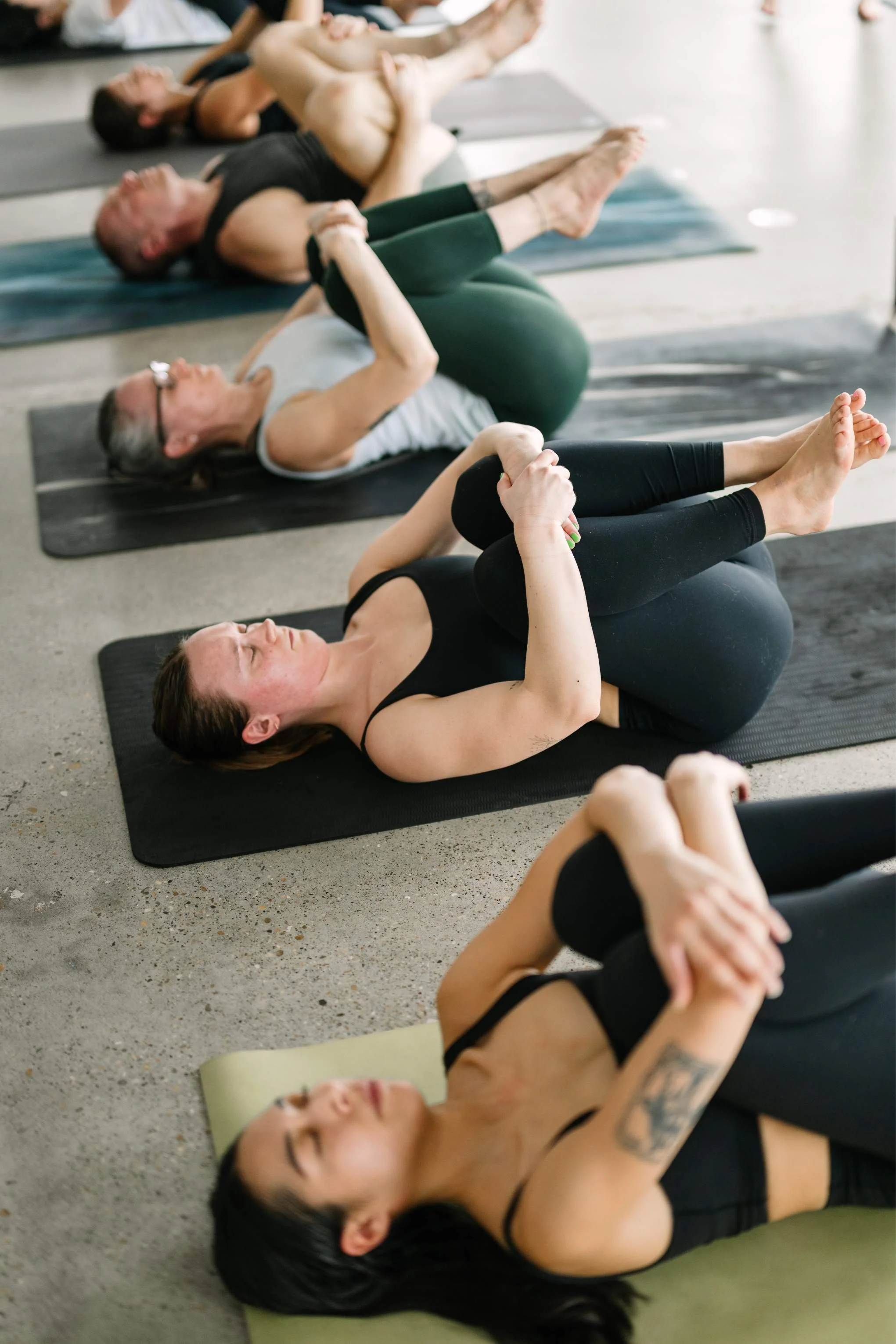
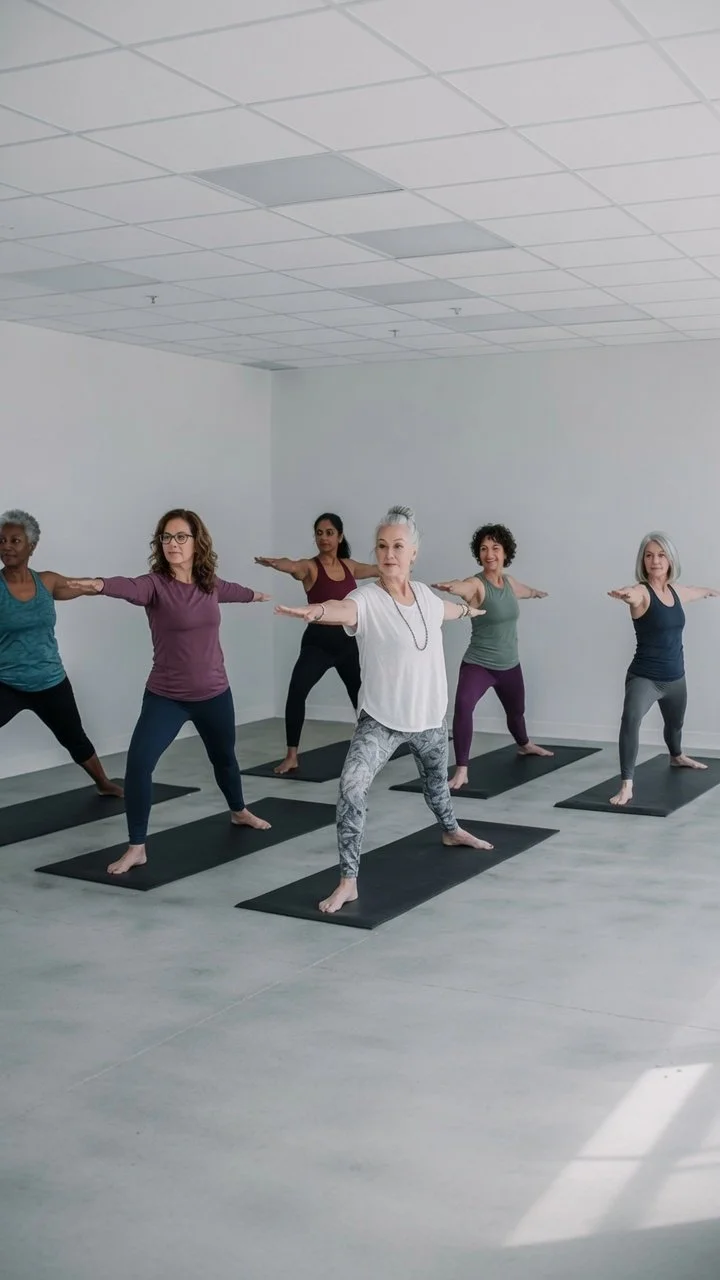
What a regular practice actually does during menopause.
Menopause is not a mood and it's not a willpower problem. It's a hormonal shift that leaves the nervous system more reactive, sleep more fragile, and joints less forgiving.
A consistent yoga practice works on several of those at once. It switches on the parasympathetic nervous system, the part that lets heart rate settle and sleep deepen. It keeps hips, spine, and shoulders mobile so stiffness has less room to set in. And it gives you an hour where your body is the only thing on the agenda.
“Reviews of randomized trials have found that yoga improves menopausal symptoms, sleep quality, anxiety, and mood in women going through menopause.”
The research is on your side.
A 2025 review of randomized controlled trials in the International Journal of Nursing Studies found that yoga improved menopausal symptoms, sleep quality, anxiety, and depressive symptoms in women going through menopause. The data backs up what your body already knows.
Sources: Wang et al., 2025, International Journal of Nursing Studies.
Different days need different classes. Here's how to choose.
There's no single "menopause class," because menopause isn't a single symptom. Some days you need to sleep. Some days your hips need to open. Some days you just need a warm, quiet room. Pick the class for the body you brought in today.
-
Restorative, Yin, and Hatha & Nidra
Long holds, full support, very little to figure out. These are the classes for the 3am brain and the nights that don't add up. Slow the system down on purpose so rest has somewhere to land. -
Yin, Happy Hips, and Healthy Hips & Back
Hips, knees, lower back, and shoulders are where the stiffness tends to settle. Longer holds and targeted movement keep the connective tissue mobile and give achy joints room to move again. -
Warm Flow and lighter Hot classes
You're already dealing with your own internal weather, so you set the dial. Start warm rather than hot. Stand near the door. Take the breaks you need. Plenty of our members tell us that choosing to be in a warm room, on their own terms, changed how they relate to heat instead of bracing against it. Skip it entirely if it's not your day. No class requires the heat.
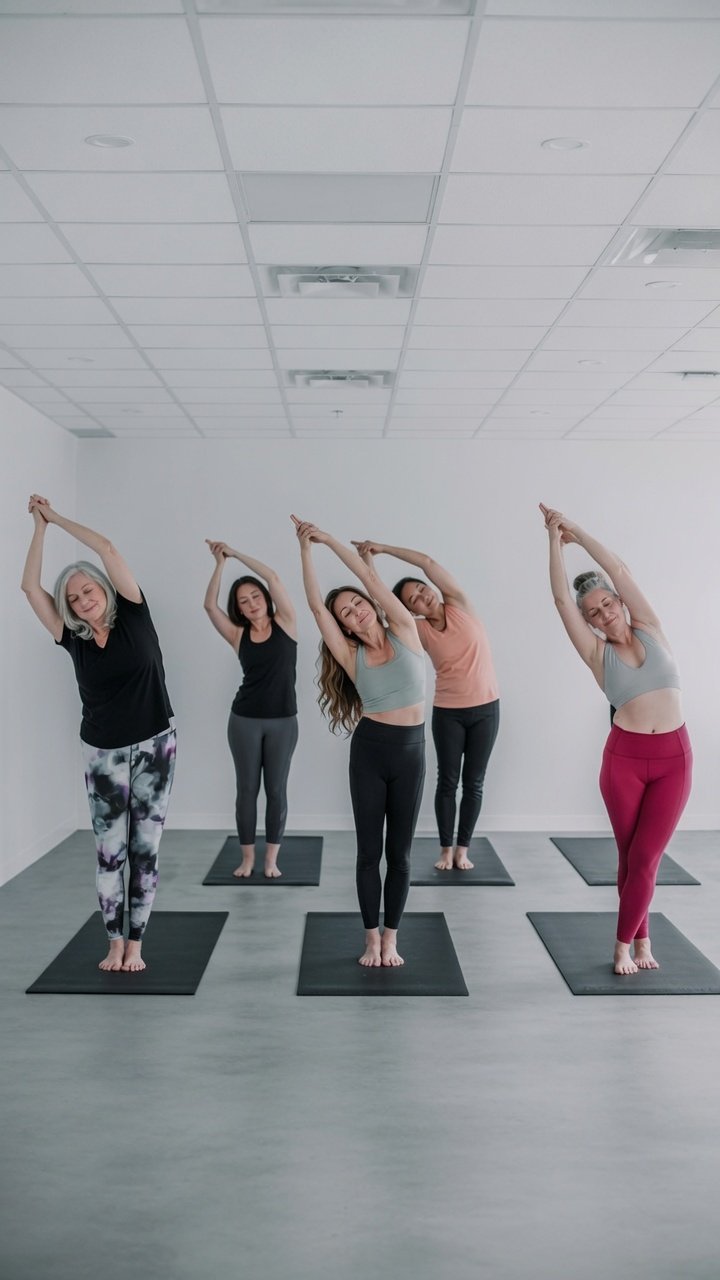
Look around the room. You're in good company.
You will not be the oldest person in the class, and you will not be the only one moving through this. You'll recognize the regulars within a week. They'll recognize you. On the mornings you don't show up, someone notices, and that turns out to matter more than almost anything else.
No matching sets required. No keeping up. No back-row shame. Just a room of real women, on a real Tuesday, doing the thing that helps.
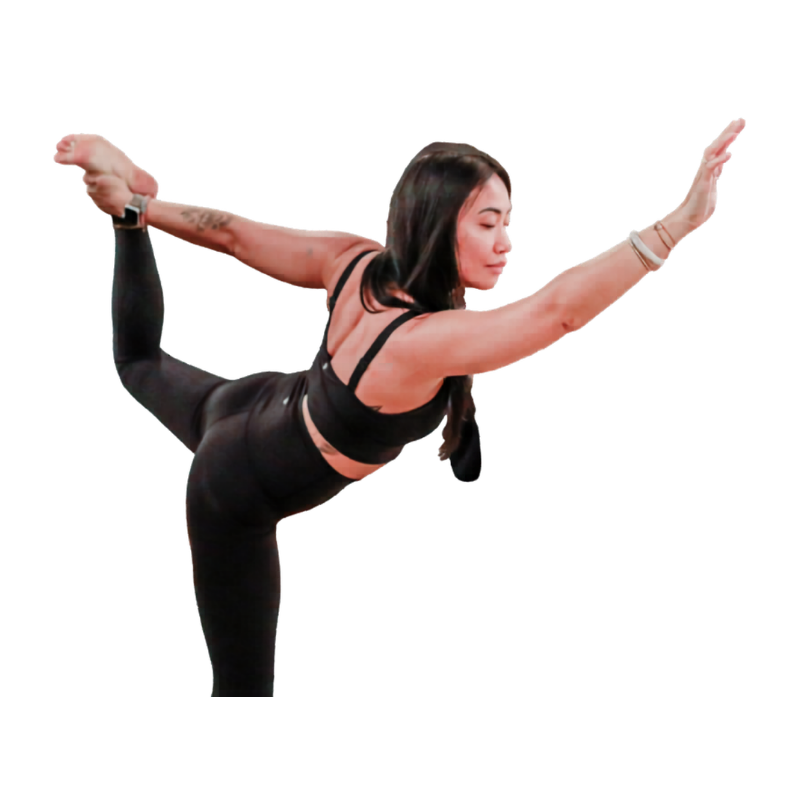
A yoga practice works on all of these in the same hour, without you having to think about it.
-
Mobility
Open up tight hips, hamstrings, and the muscles around the spine.
-
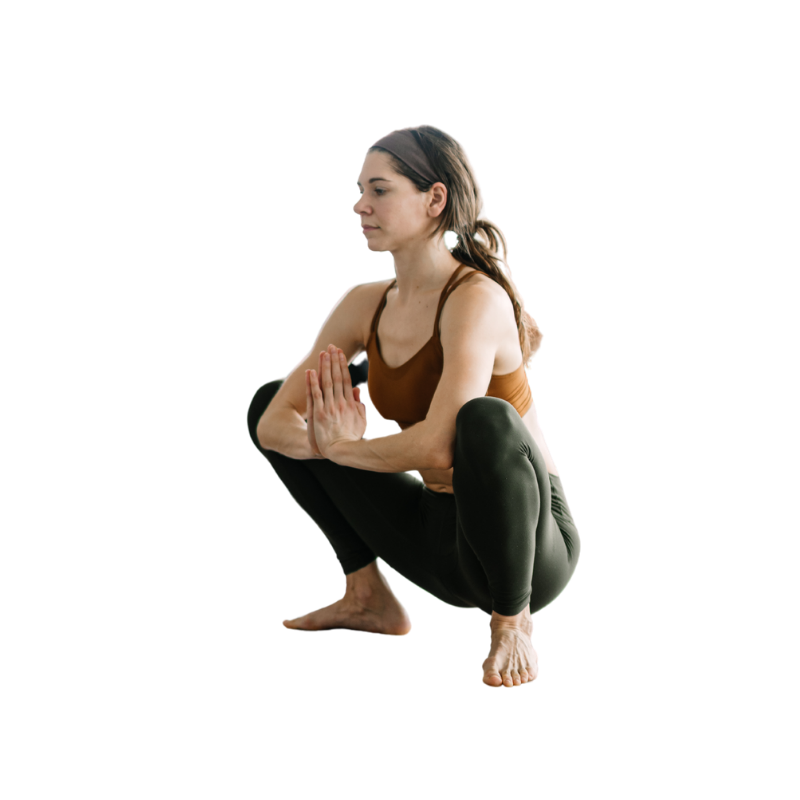
Strength
Build real support through the core, glutes, and back body. (Not abs. Support.)
-
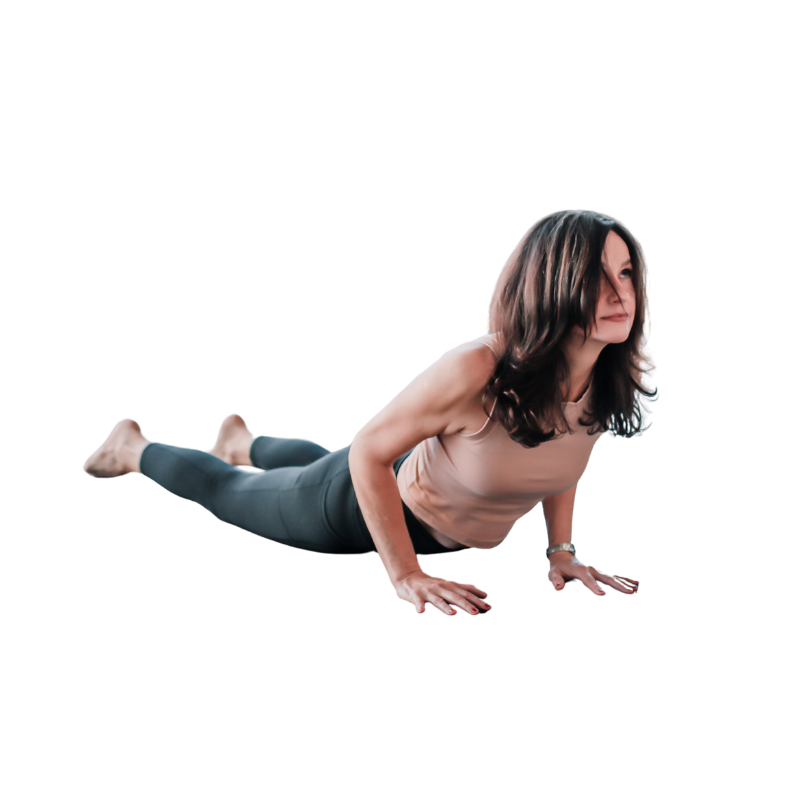
Nervous system
Downshift the tension patterns that keep your body braced and guarded.
-
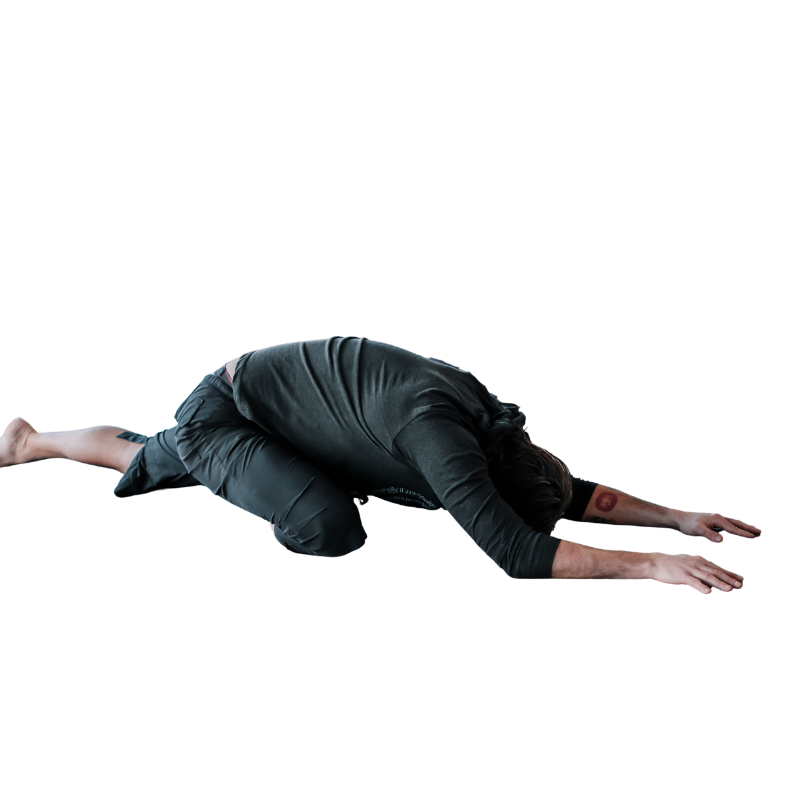
Body awareness
Learn what helps your back, what's too much, and when to back off.
MEMBER FEEDACK
Start with classes that meet your body where it is.
-
Slower pace, healing-oriented, strength and functional movement for hips and back. A good first class if joints are your main complaint.
-
Long holds, 3 to 5 minutes per pose, to open hips, hamstrings, and the connective tissue around the spine. Quietly one of the most useful classes through menopause.
-
Gentle movement followed by guided rest. Built for sleep and a nervous system that won't switch off.
-
Slower than a flow, focused on hip strength and flexibility, where a lot of menopausal stiffness lives.
-
Gentle rhythm and light strength building in a warm room. A good next step once the slower classes feel familiar.
Common questions, honest answers.
-
You're in charge of the heat, not the other way around. Start with our warm or non-heated classes, Yin, Hatha, Healthy Hips & Back, and try a warm room only when you feel like it. Stand near the door, take breaks, leave if you need to. Many members find that being warm on their own terms feels different from a hot flash that ambushes them. And no class requires the heat. Plenty of our most useful classes for menopause aren't hot at all.
-
No. It's the reason to start, not a reason to wait. Every class welcomes every level, props are encouraged, and modifications are always on offer. You set the pace.
-
A lot of people's one bad yoga memory is a cold, silent, alignment-obsessed class that felt like a test. That's not what these are. Slower, warmer, prop-friendly, and taught by people who'd rather you feel good than look correct.
-
Wellness marketing tells you to drink more water and think positive. We're pointing you to a 2025 review of randomized trials that found yoga improved menopausal symptoms, sleep, anxiety, and mood. It won't replace your doctor, and we'd never tell you it does. It's one of the few things that helps the sleep, the joints, and the mood at the same time.
-
Two to three is the sweet spot for feeling a difference. With your $59 two-week pass, aim for three to five classes so your body has time to respond.
-
No. After your trial it's month-to-month if you want it, and you can stop when you like. No long-term lock-in.
Two weeks. $59. No catch.
The things that help during menopause rarely feel dramatic in the moment. They just add up. The only way to know if a practice belongs in your life is to show up a few times and feel the difference for yourself.
The goal is not to perform yoga. The goal is to build a practice you can keep doing for the next month, the next year, and the next decade.

After your two weeks, month-to-month and short-term memberships are available. No pressure to commit long-term.