Your back hurts by 4pm.
It doesn't have to.
Eight hours at a desk won't undo with five minutes of stretching. Our beginner-friendly classes are built for backs that are wrecked by the end of the workday, not for people who already look good in yoga pants.
SEE BACK-FRIENDLY CLASSES →
You don't have a yoga problem. You have a sitting problem.
By 4pm, your hips are locked. Your low back has a knot you can almost name. You've tried the standing desk. You've tried the foam roller in the corner you keep meaning to use. You stretched for five minutes this morning and felt great for about twenty.
Most chronic low back pain isn't from one bad lift or one wrong move. It's from a body that sits 40+ hours a week and never gets a structured, repeatable reason to move differently.
That's what a yoga practice actually is. Not a vibe. Not a workout. A reason to move differently, three or four times a week, with someone watching out for you.
After your two weeks, month-to-month and short-term memberships are available. No pressure to commit long-term.
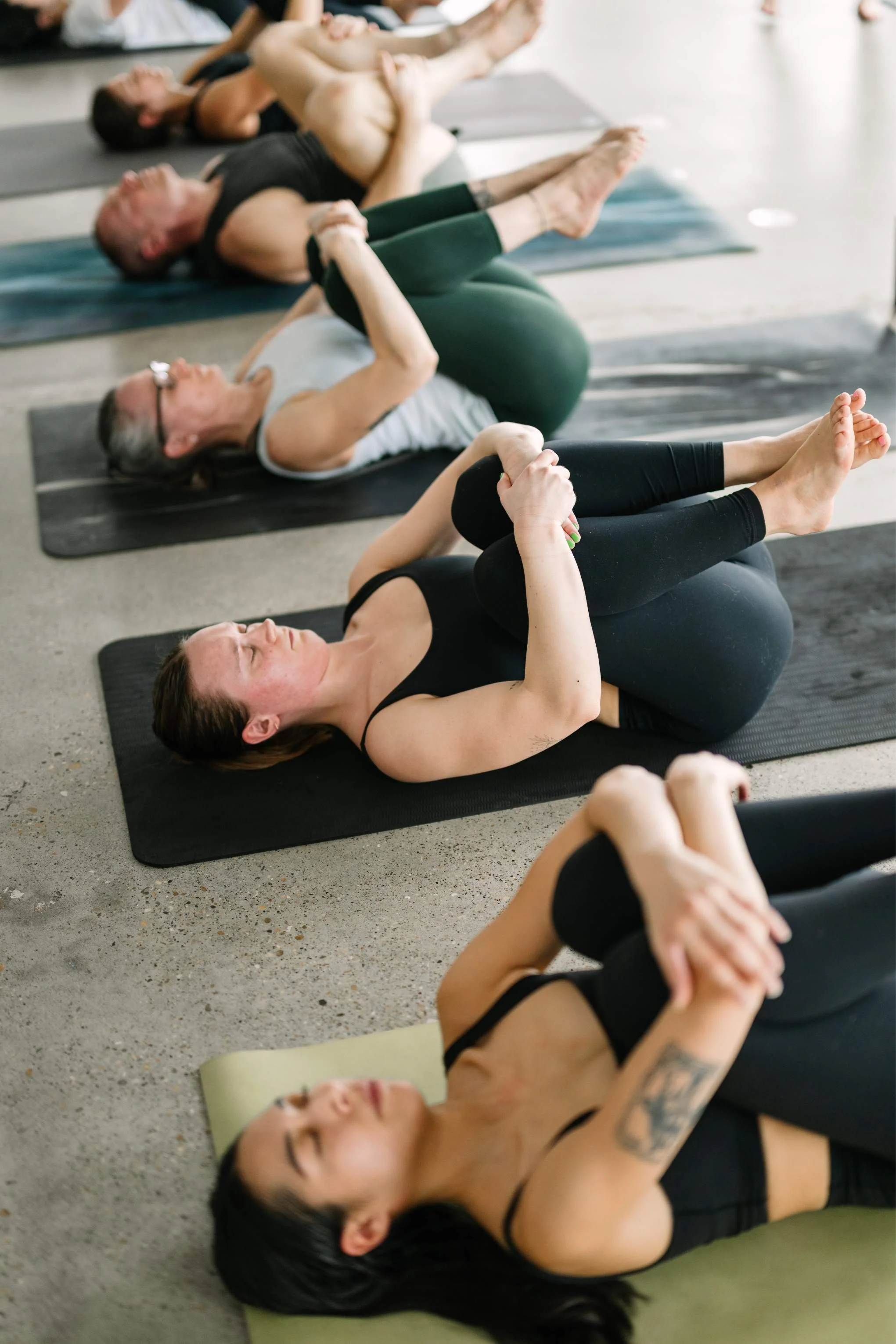
This isn't wellness marketing.
It's in the clinical guidelines.
-
"The American College of Physicians lists yoga among the first things doctors should recommend for chronic low back pain — before drugs. That's a clinical guideline, not a wellness trend."
— Source: ACP, Annals of Internal Medicine, 2017
-
"A Cochrane review of 21 randomized trials (over 2,200 people) found yoga improved back function and reduced pain compared with no exercise. Effects were comparable to other back-focused exercise."
— Source: Cochrane Database of Systematic Reviews, 2022
-
"A 2024 JAMA Network Open trial found 12 weeks of structured hatha yoga improved pain, function, sleep, and reduced reliance on pain medication for adults with chronic low back pain. Effects held at 24 weeks."
— Source: Tankha et al., JAMA Network Open, 2024
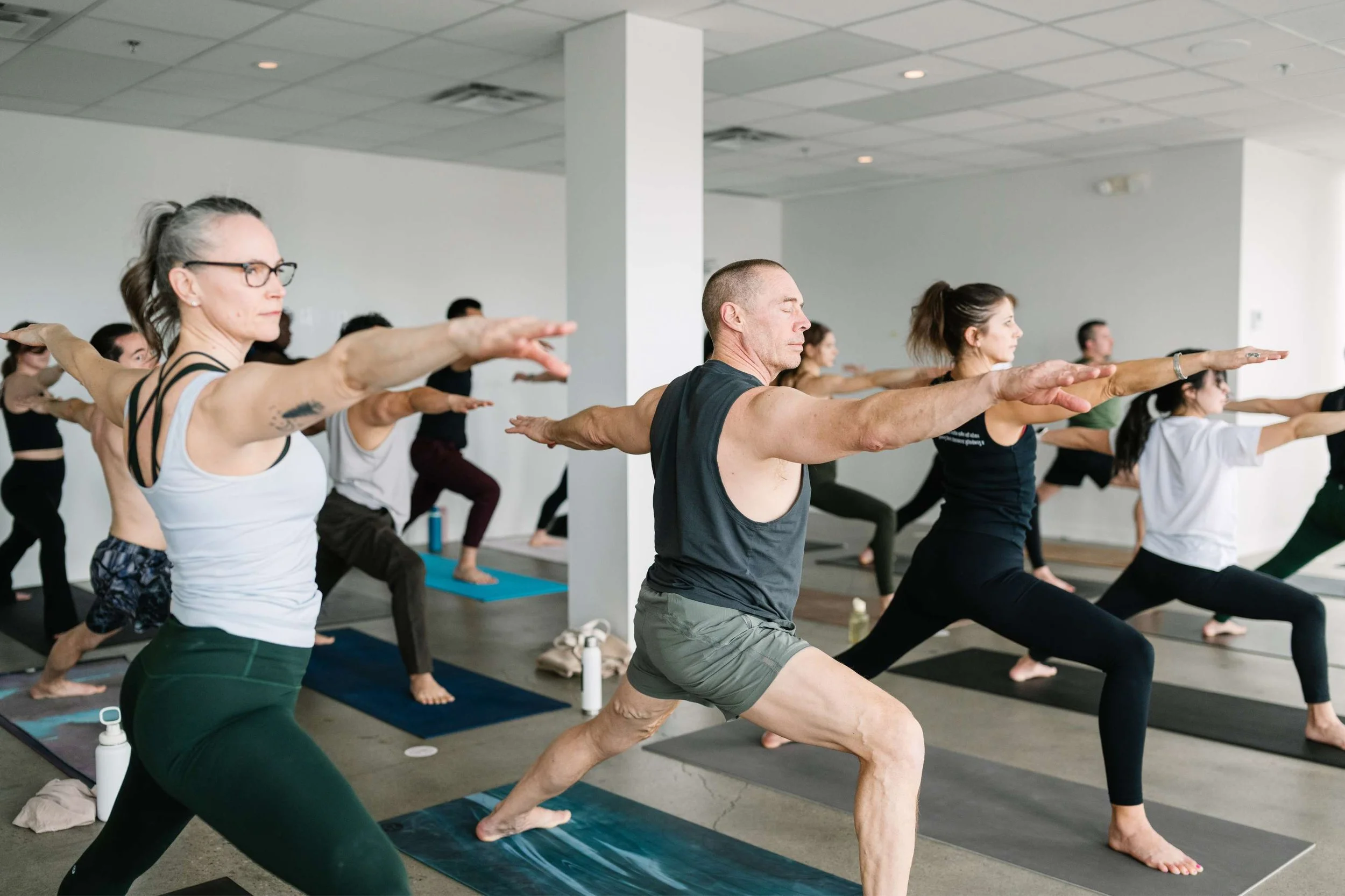
Back pain isn't one problem.
So one stretch won't fix it.
Chronic low back pain almost always involves more than one thing: hip mobility, core stability, hamstring tension, stress that lives in your shoulders, sleep you're not getting, and a body that's lost confidence in its own movement.
A yoga practice works on all of these in the same hour, without you having to think about it.
-
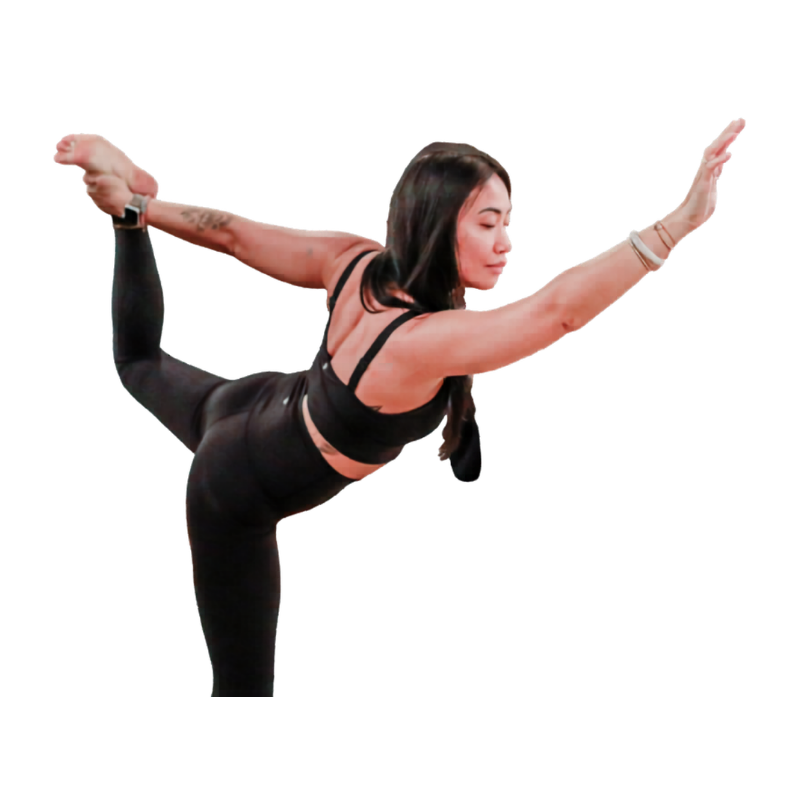
Mobility
Open up tight hips, hamstrings, and the muscles around the spine.
-
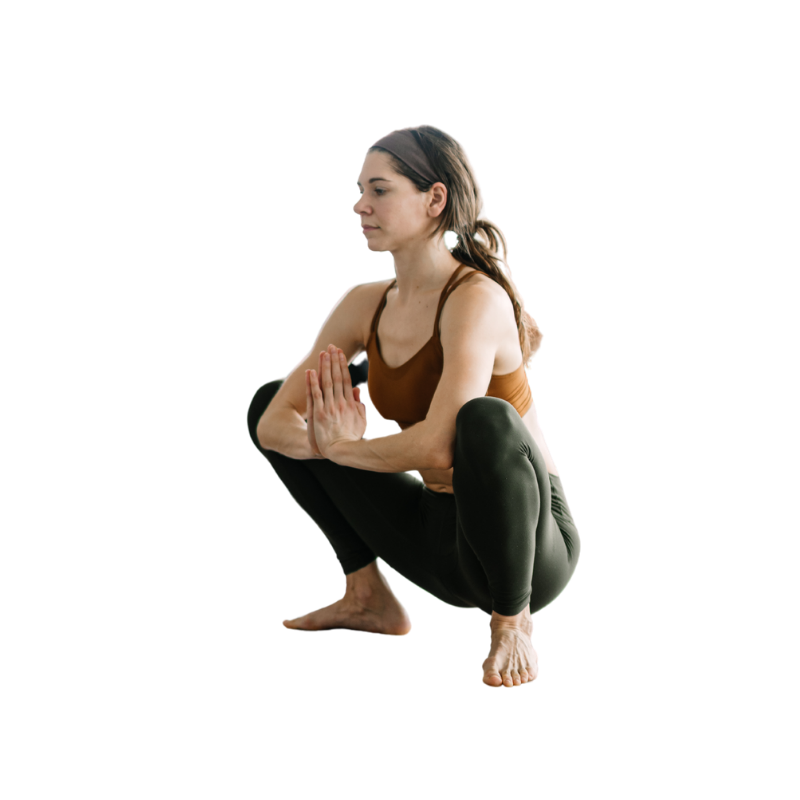
Strength
Build real support through the core, glutes, and back body. (Not abs. Support.)
-
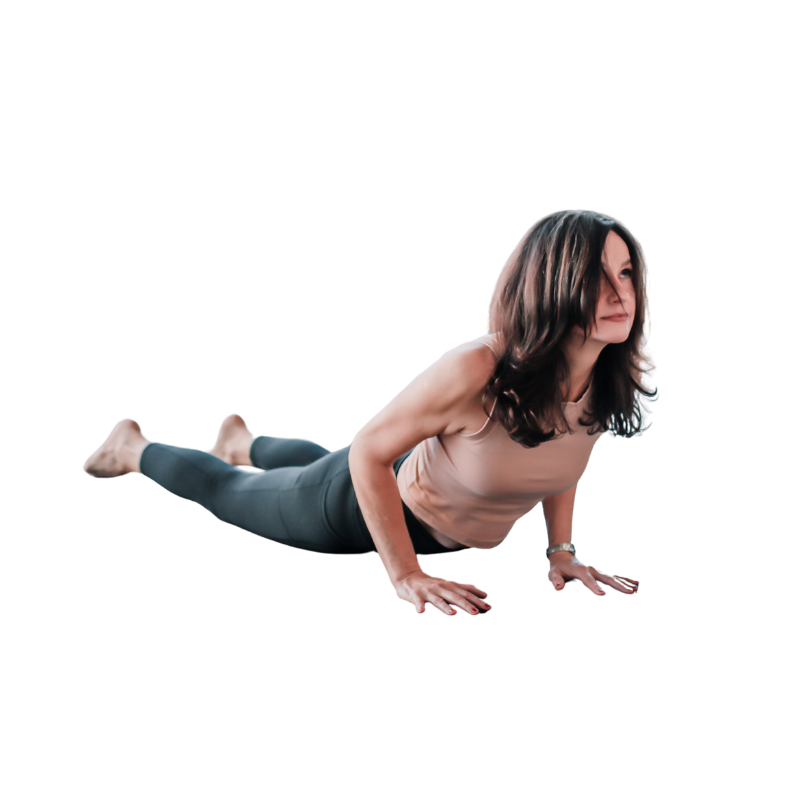
Nervous system
Downshift the tension patterns that keep your body braced and guarded.
-
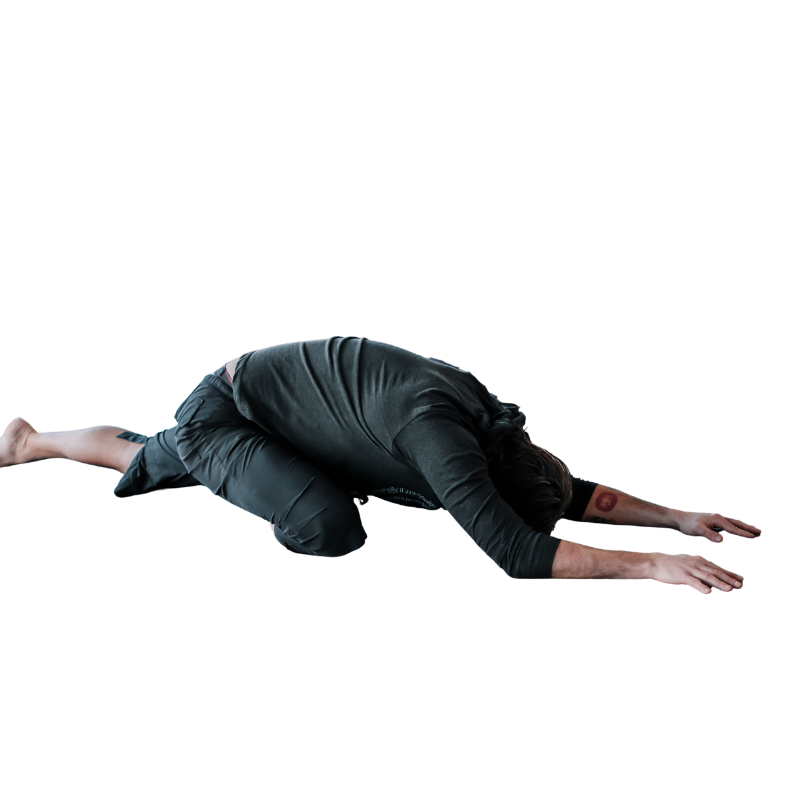
Body awareness
Learn what helps your back, what's too much, and when to back off.
Member Feedback
-
I’ve been going to Yoga Life for over a year now, and it’s been a great experience. The instructors are welcoming and knowledgeable, and the studio has a calm, inviting vibe. I especially enjoy the Hot Flow in a dark room and Pilates classes, they’re challenging, energizing, and always leave me feeling refreshed. Yoga Life has become an important part of my weekly routine, and I highly recommend it.
— G G
-
Yogalife has truly helped heal and transform my body and mind and beyond. I have never found more peace, happiness, wellbeing and strength in my life. Thank you especially to Dalynn, whose motivation and amazing classes get me out of bed every morning!
— C Q P
-
Hands down best studio in the city. Classes are well structured, instructors are knowledgable, tea is yummy, and the students are fab. I’ve been looking for a yoga home for a couple years and after a lot of misses am so glad to have found Yogalife.
— T M
Start with classes that meet your back where it is.
-
The class built for this. Strength and functional movement for hips and back, slower pace, healing-oriented. If you read this whole page and only try one class, try this one.
-
A smart, strength-focused flow designed to build a stable core, resilient hips, and strong shoulders, so you move better in daily life and feel powerful in your practice.
-
Slower pace, longer holds, prop-friendly. Great for learning what your body actually needs.
-
Longer holds (3-5 minutes per pose) to open hips, hamstrings, and the connective tissue around the spine. Counterintuitively the most useful class for many tight desk workers.
-
Movement with some rhythm and gentle strength building. Once you've done a few of the above, this is your next step.
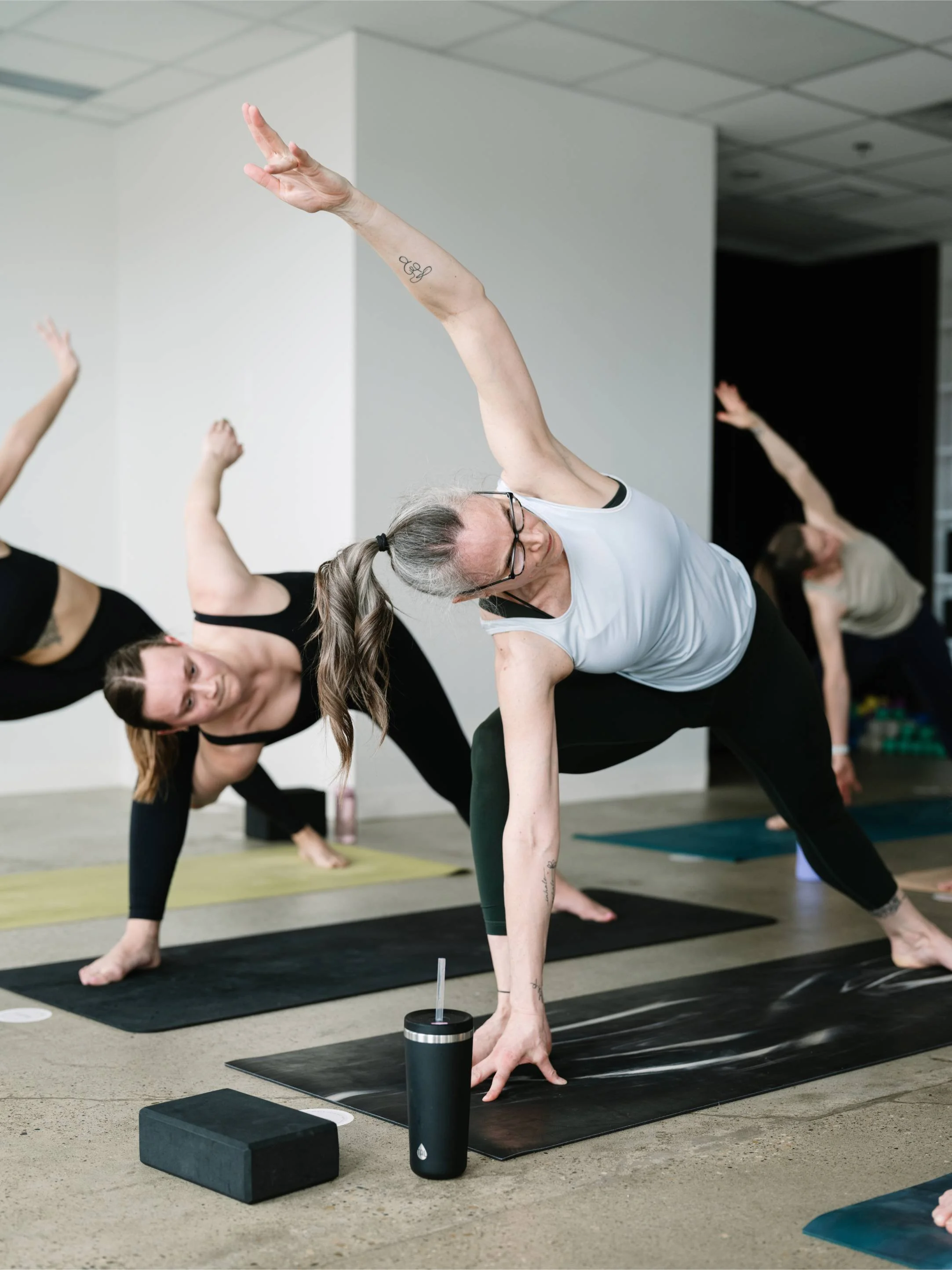
A back-friendly way to use your two weeks.
You don't need to come every day. You need enough classes to feel a difference — and to know whether this is going to work for you. The research suggests 5 classes is enough to know.
Healthy Hips & Back
Class 1
Get oriented. Tell the teacher about your back before class starts. (or Gentle Hatha if Hips & Back isn't running that day)
Yin
Class 2
Slower, longer holds. This is where most desk workers feel their first real release.
Warm Flow
Class 3
Add a little gentle movement and warmth.
Repeat the one that helped most
Class 4
You'll already know which one.
By now they'll know your body, and they'll have a recommendation that's actually for you.
Ask your instructor what to try next
Class 5
Common questions, honest answers.
-
This is one of the best reasons to start a yoga practice. Everyone has tightness somewhere in their body, especially if you sit for most of the day. Flexibility is a result of practice, not a requirement for it.
-
All levels are welcome at any of our classes. For your first few visits, we recommend Healthy Hips & Back, a warm foundations class, or a Hatha class. Have a look at the class description on the schedule and find one that suits where your body is right now.
-
To really feel the benefits, especially for back pain, we recommend 2 to 3 classes per week. With your $59 / 2 weeks unlimited pass, aim for 3 to 5 classes over the two weeks so your body has enough time to respond.
-
Maybe. It depends on what's going on and how much or how little your body can work with it. If your back pain is new, severe, spreading down your leg, or linked to a diagnosis, check in with your healthcare provider first. Otherwise, give us a call, text, or email and we'll help you figure out a good starting point. Always let your teacher know what's up when you arrive, so they can offer modifications to keep you safe and comfortable.
-
For most chronic, non-specific low back pain, gentle heat actually helps muscles relax. But you don't need to start hot. We recommend beginning with Healthy Hips & Back, Hatha, or Yin, which are non-heated or gently warm. Hot Flow is a great option once you have a feel for how your body responds to movement, not on day one.
-
Just arrive a few minutes early and mention it quietly before class. Something like "I'm dealing with some low back stuff, anything I should know?" is plenty. Our teachers will keep an eye out and offer modifications when relevant. No big announcement, no spotlight.
You don't need to be flexible.
You need a place to start.
Every class at Yogalife is for different bodies, different experience levels, and different days. Use props. Rest when you need to. Stay in child's pose for half the class if that's what's right for you today.
When you arrive, tell your teacher you're working with back discomfort. They'll watch out for you. They won't make a thing of it.
The goal is not to perform yoga. The goal is to build a practice you can keep doing for the next month, the next year, and the next decade.

After your two weeks, month-to-month and short-term memberships are available. No pressure to commit long-term.